‍

Impact Analysis

Compare project alternatives based on expected costs, benefits and risks. The module applies cost-benefit analysis methodologies recognised by the European Commission and supports traceable, well-founded decisions, including for DOCFAP purposes.
BOOK A DEMO
WHEN TO USE IT

Assess and communicate the impacts of an investment

01
Estimate expected impacts
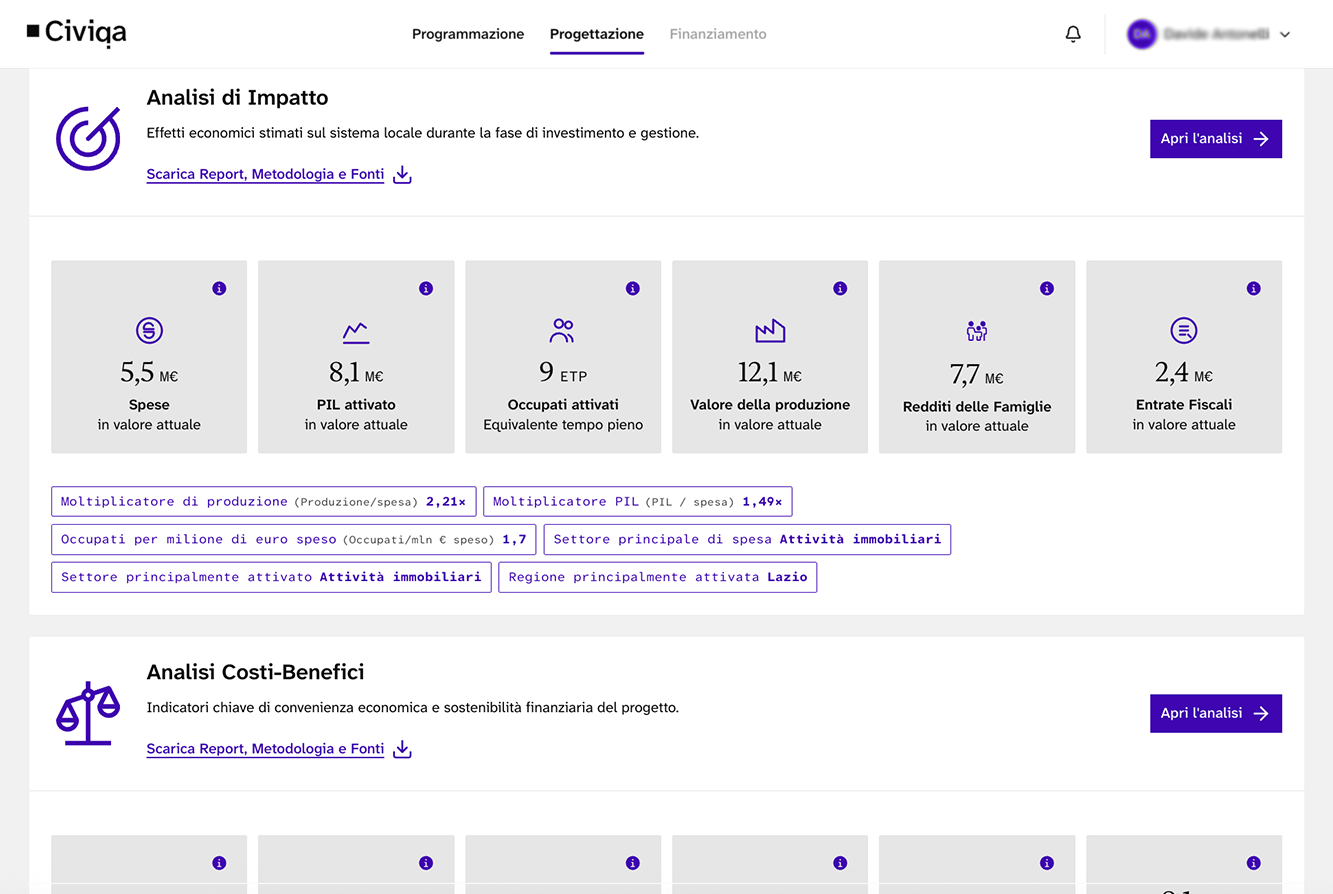
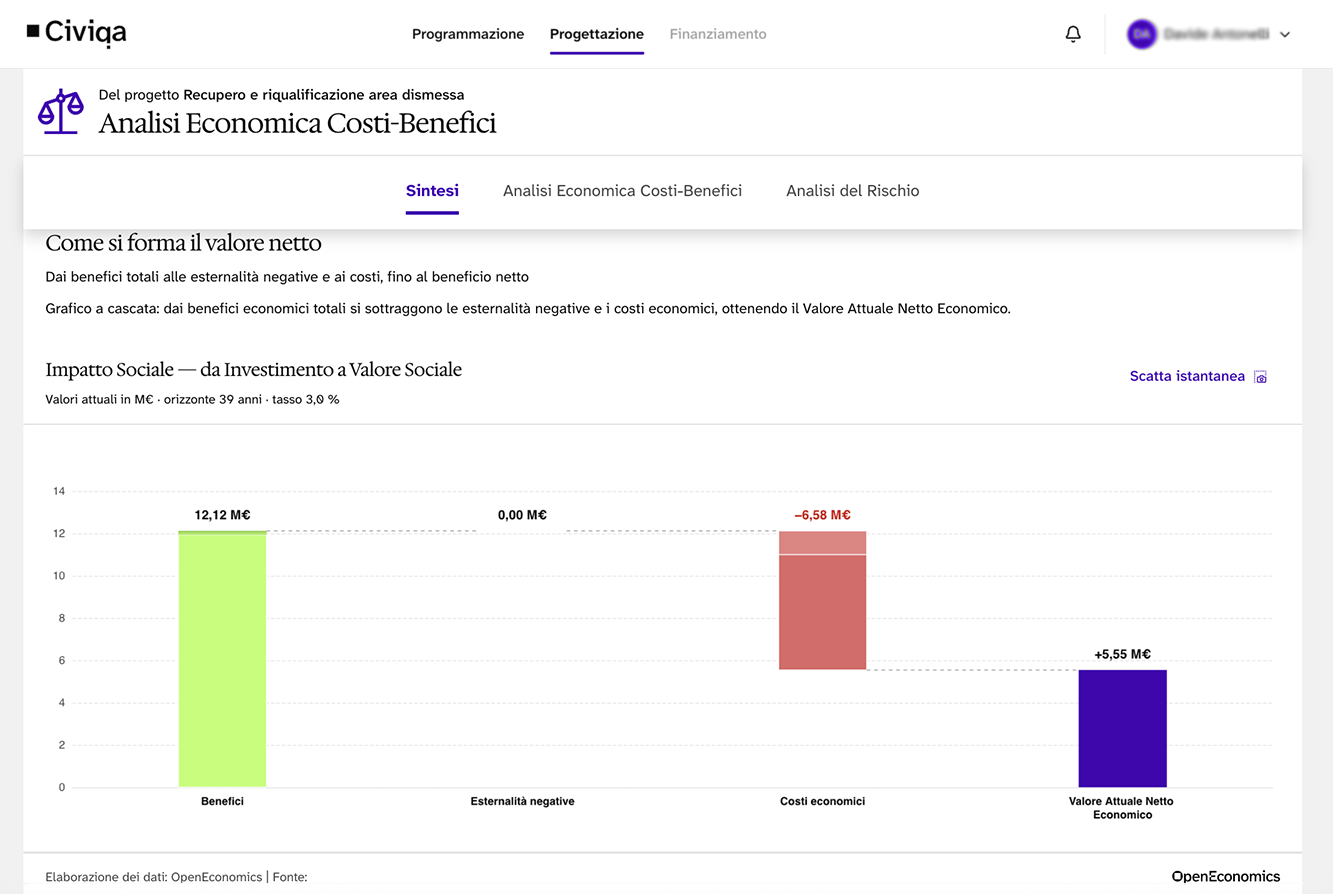
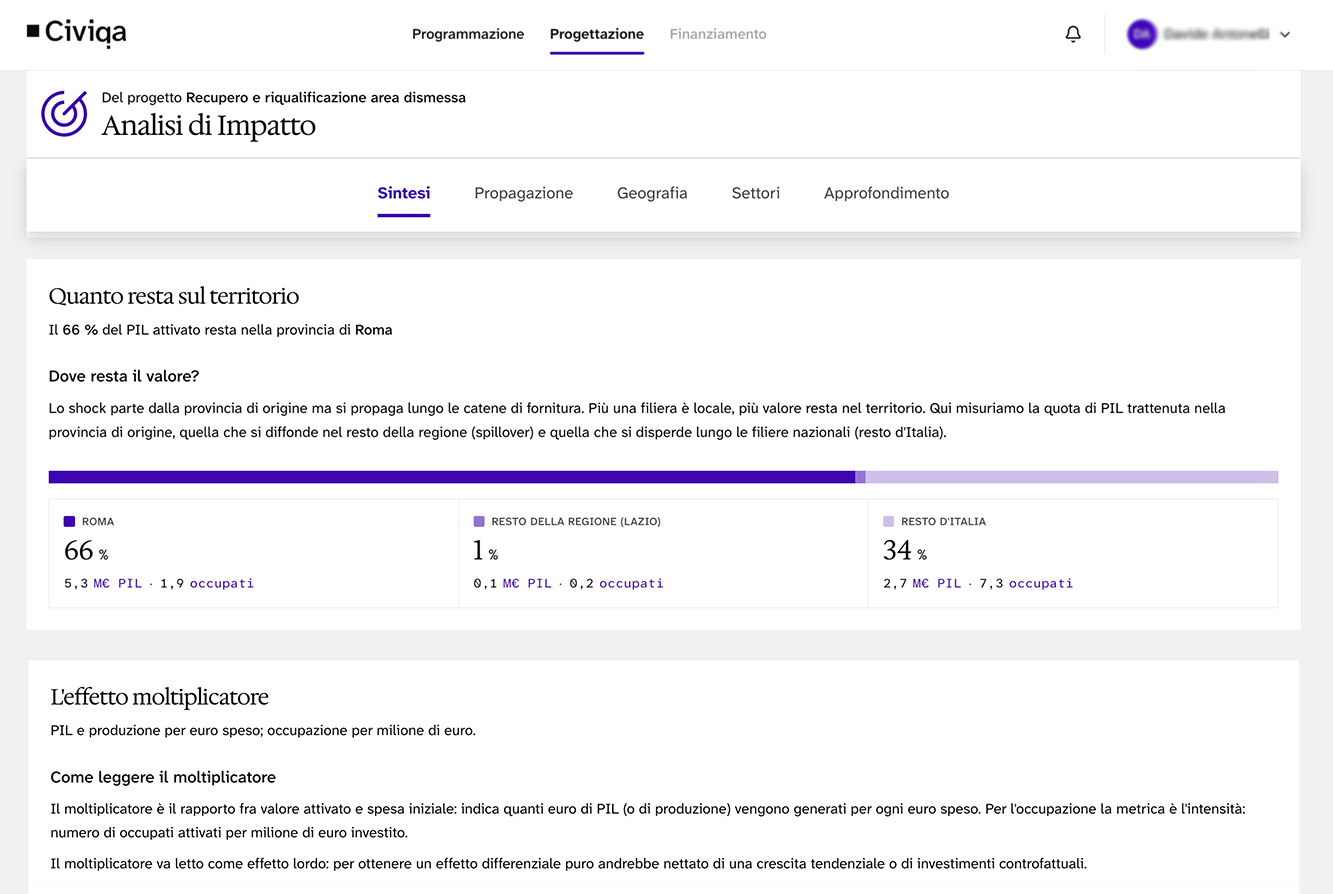
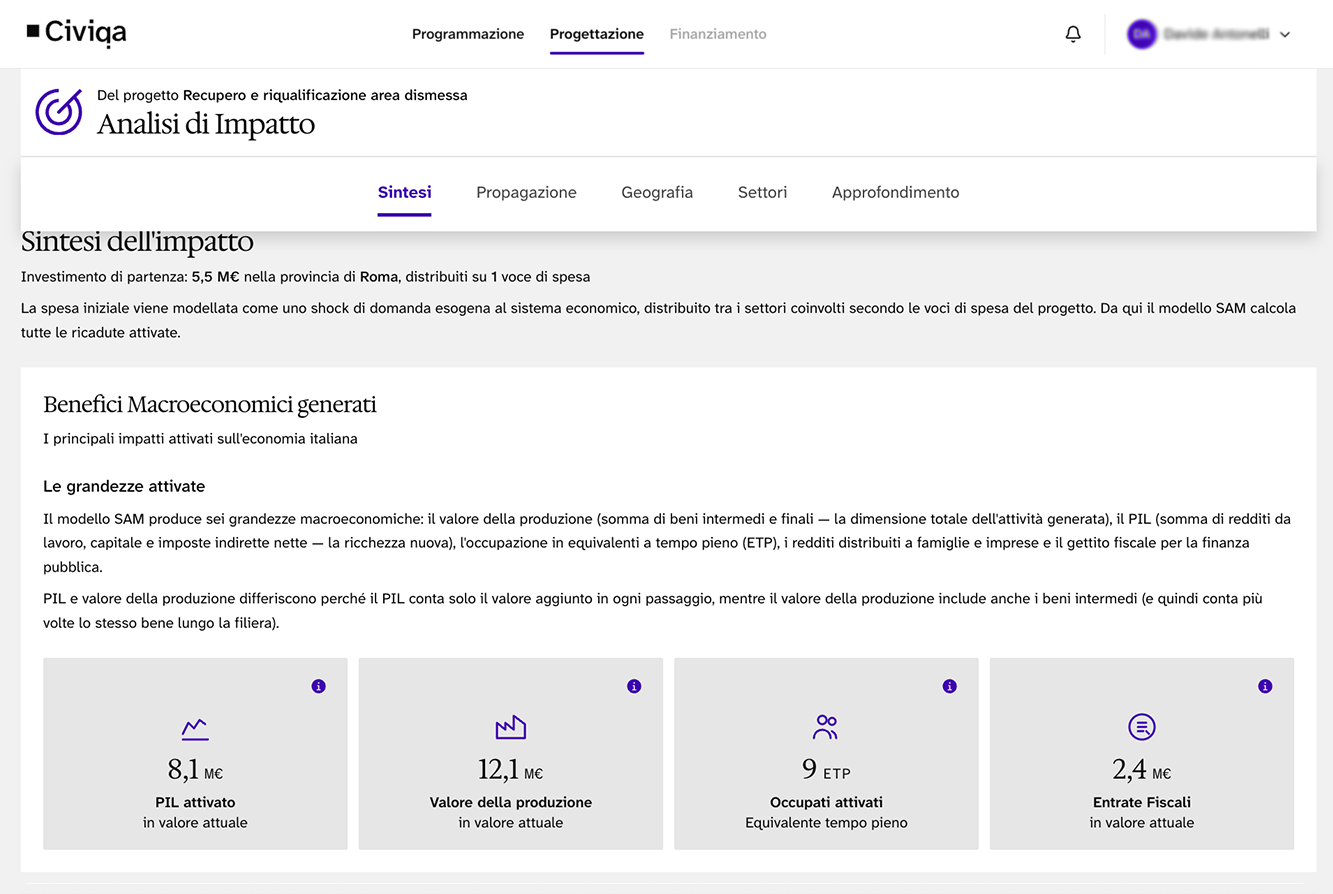
Before implementation, the module estimates the economic and social impacts of a project using indicators such as GDP, employment, tax revenue, economic net present value (ENPV) and SROI.
02
Measure actual impacts
Assess the results of an investment and compare them with estimates made during planning. The module measures any differences between expected and actual impacts.
03
Document and communicate results
The module provides indicators and summary content for citizens, elected representatives, funding bodies and oversight authorities.
Benefits
Measured and documented impacts
Credible evidence of socioeconomic impacts
Measure both the economic and social impacts of a project using robust indicators.
Transparent comparison of estimates and results
Compare estimated and actual impacts, measure any differences, and link ex ante and ex post analyses on the same platform.
Effective, sustainable communication
Communicate the impacts of an investment to citizens, elected representatives and funding bodies using verifiable data and indicators.
Less work for public authority staff
Reduce staff workload and the need for in-house specialist expertise. The guided process applies estimation methods and techniques.
features
A guided process in three steps
Enter available data
Enter existing project data: initial estimates and, for ex post assessments, information on how the project was implemented.
Civiqa produces the impact assessment
The platform applies the relevant methods and calculates economic and social indicators. Where ex ante and ex post data are available, it compares estimates with results.
Review the results
The module provides indicators and summary content for use in project documentation, institutional presentations and communications.
KEY FEATURES OF THE MODULE
Advanced and accessible tools that enable precise and accountable evaluations
Fewer clicks, simpler workflows
The module handles methodological complexity through guided workflows, reusing data already available for the project
Robust, specialist analyses
Cost-benefit, impact and ESG analyses aligned with international best practices and standards
One place to compare results
Compare ex ante and ex post analyses on one platform using GDP, employment, tax revenue, SROI and economic net present value (ENPV)
Indicators for clear communication
Clear indicators and summary results for use in executive meetings, reports and institutional communications
faq

More about Impact Analysis

1. In what form are the results available?

The module provides economic and social indicators, along with summary content that can be used in institutional presentations, reports, public communications and project documentation.

2. What data does the public authority need to provide?

The platform can use existing project data, such as initial estimates and, for ex post assessments, information on the implementation of the project. The guided process shows which information to enter at each stage.

3. Is specialist economic expertise required?

No specialist economic expertise is needed to use the guided process. Staff provide the necessary project data, while the platform applies the methods, estimates and calculations.

4. If an ex ante assessment has already been carried out, why conduct an ex post assessment?

An ex ante assessment estimates the expected effects before a project begins. An ex post assessment measures the effects achieved. Comparing the two helps identify differences and provides a documented basis for communication and review.

5. Why conduct the analysis if it is not legally required?

Even when it is not mandatory, the analysis helps public authorities understand and communicate the effects of an investment using data and indicators. The results support transparency, policy evaluation and institutional communication.