‍

Alternatives Analysis

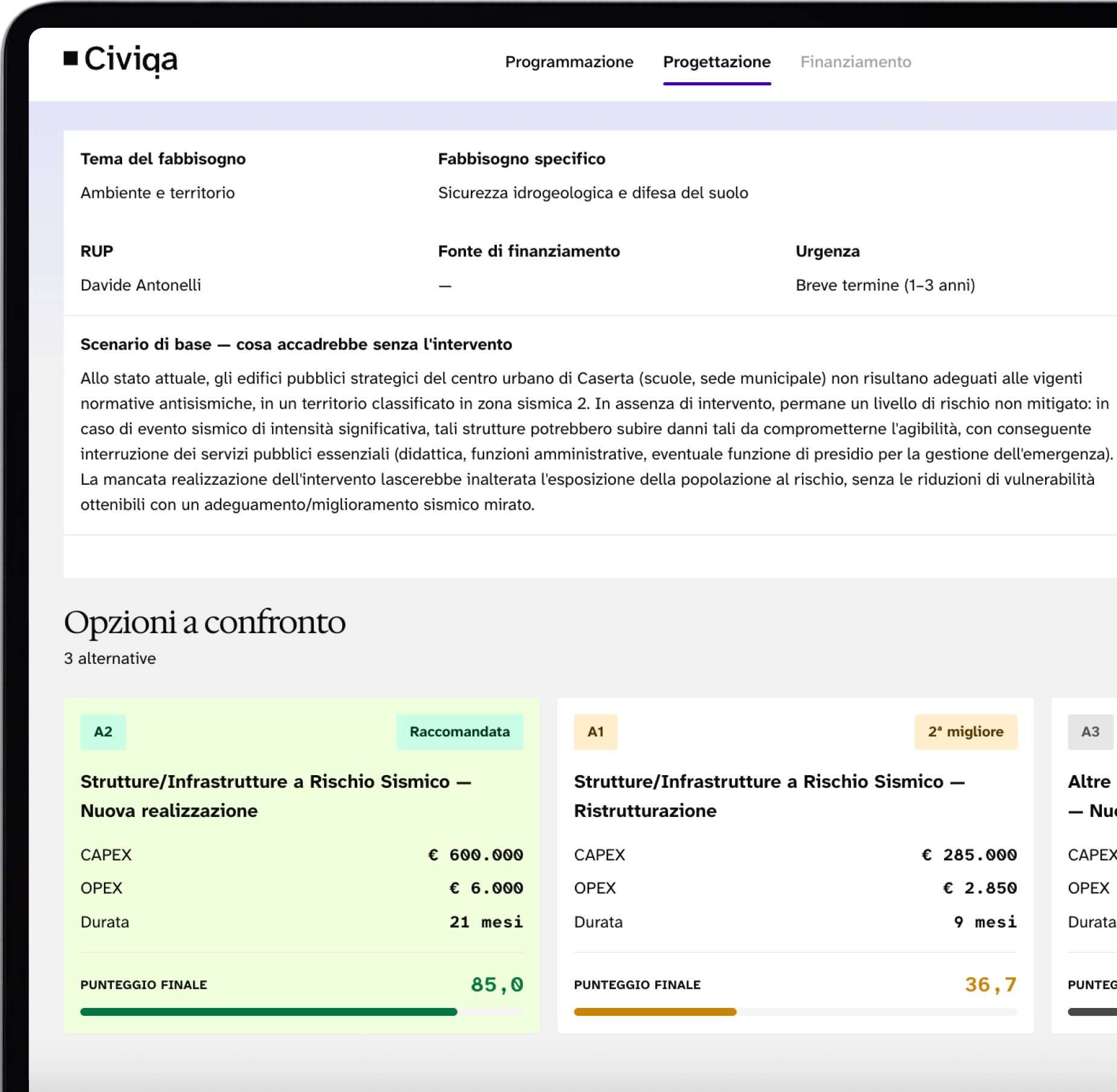
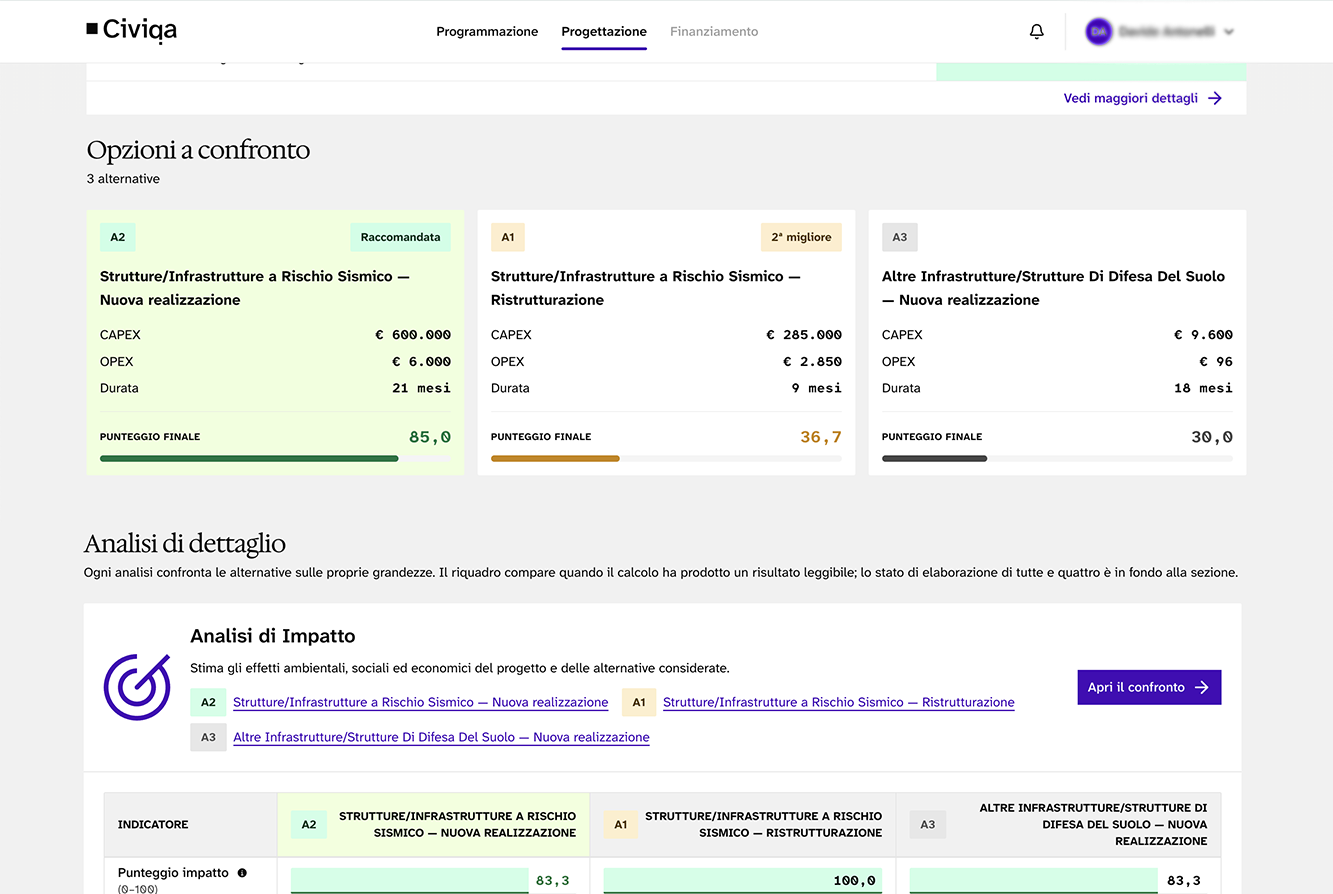
Compare project alternatives based on expected costs, benefits and risks. The module applies cost-benefit analysis methodologies recognised by the European Commission and supports traceable, well-founded decisions, including for DOCFAP purposes.
BOOK A DEMO
WHEN TO USE IT

Two approaches to assessing project alternatives

01
Choose between alternative investment options
The module compares different investment options based on costs, expected economic and social benefits, and risks. It can also be used when preparing a DOCFAP is not required.
02
Prepare the economic and social component of the DOCFAP
When a DOCFAP is required, Civiqa supports the assessment of alternatives in line with the process set out in the Italian Public Contracts Code and prepares the economic and social component of the document. Data, analyses and the rationale behind the decision remain fully traceable.
BENEFITS
Traceable, well-founded decisions
When assessing alternatives
  • 1. Assessment of expected benefits
    Compare investment options and identify which one is expected to generate the greatest economic and social benefits for the local area, given the same level of resources.
  • 2. Validation of estimates
    ‍
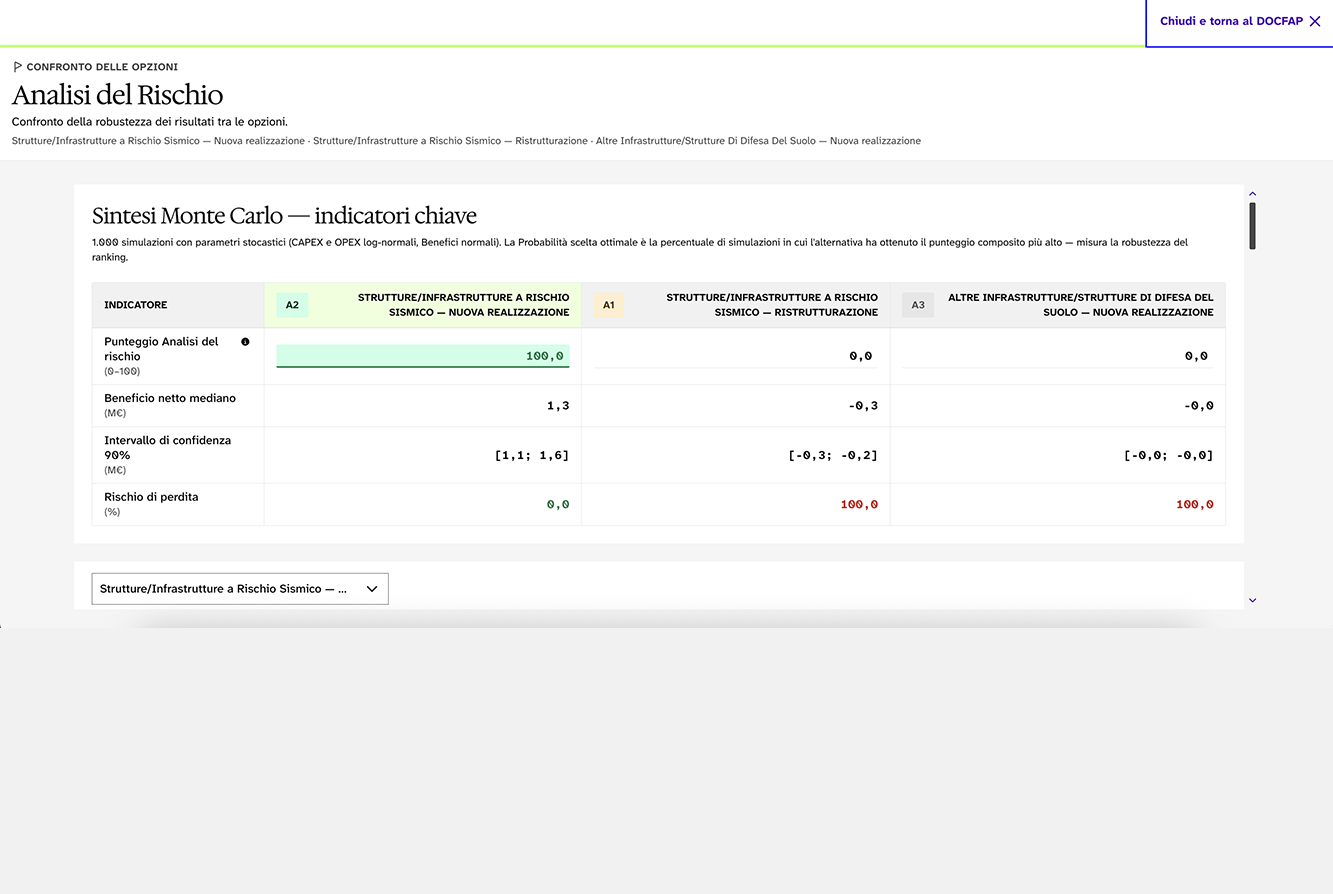
    Assess costs, benefits and changes in key parameters through risk and sensitivity analyses to test the robustness of each alternative.
  • 3. Support for funding applications
    ‍
    Document expected economic and social impacts, strengthening the evidence base for funding applications and comparisons between projects.
  • 4. Data-driven communication
    Provide verifiable and traceable data to communicate the expected value of the selected project to oversight bodies, stakeholders and citizens.
When preparing the DOCFAP
  • 1. Documentation of the decision-making process
    Organise data, analyses and the rationale behind the decision within a structure aligned with the Italian Public Contracts Code and the requirements for socioeconomic assessment.
  • 2. Guided process
    Enter the required data and let the platform automatically apply methodologies, estimation techniques and indicators, with the same level of rigour as a specialist analysis.
  • 3. Integrated analyses
    Assess the project’s economic and social benefits and test the robustness of the selected option against changes in costs, timelines and other relevant parameters.
  • 4. Support for reviews and verification
    Keep data and documents readily available to reconstruct the rationale behind the decision and compare the economic and social benefits of the different alternatives.
FEATURES
A guided process in three steps
Enter the alternatives
Upload the project options, baseline data and any technical documents already available.
Civiqa performs the analysis
Civiqa applies cost-benefit, risk and sensitivity analysis methodologies and provides estimates and results for each alternative.
Download and complete the document
Export a pre-filled, editable Word document to be validated, completed and signed in accordance with your organisation’s procedures.
KEY FEATURES OF THE MODULE
Advanced and accessible tools that enable precise and accountable evaluations
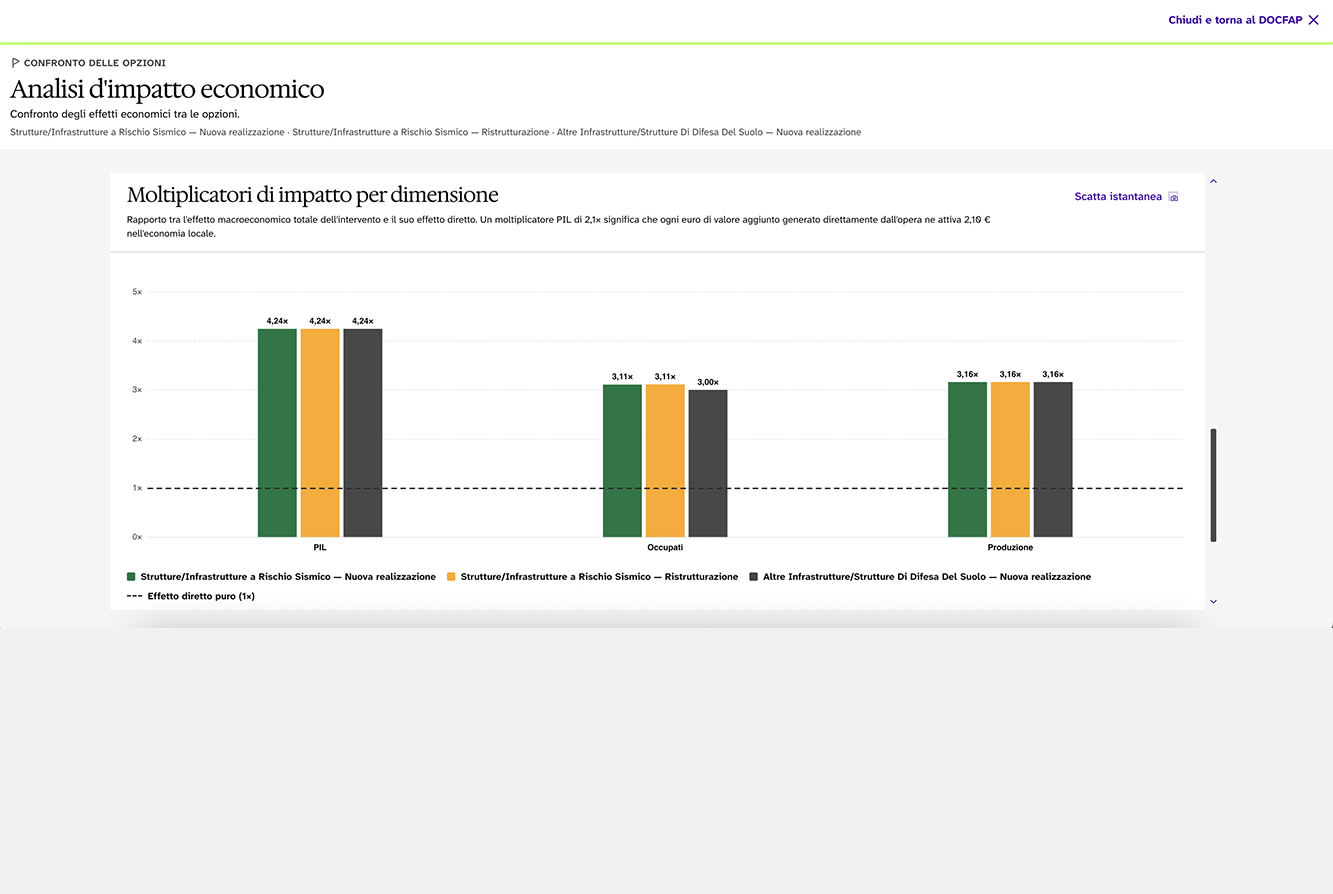
Integrated analyses and proprietary methodology
Civiqa follows Annex 7 to Italian Legislative Decree 36/2023 and applies a proprietary methodology that brings together cost-benefit, impact
European standards and risk analysis
The module applies cost-benefit analysis methods recognised by the EU Commission, alongside risk and sensitivity analyses of key parameters
A project profile for each alternative
Each alternative has its own project profile, viewable on its own or compared with other alternatives and ex ante and ex post analyses
Editable documents
The analyses are exported to a prefilled, editable Word document for the authority to validate, complete and sign under its procedures
faq

More about Alternatives Analysis

1. The analyses are exported to a prefilled, editable Word document for the authority to validate, complete and sign under its procedures

Even when a DOCFAP is not required, the module allows public authorities to compare project alternatives based on costs, benefits and risks. This gives them a documented, quantitative basis for selecting the most suitable investment option and justifying the use of public funds.

‍

‍

‍

2. Does the module produce a complete DOCFAP ready for submission?

The module prepares the socioeconomic component of the DOCFAP and generates a prefilled, editable Word document. The public authority must validate it, add the necessary technical documentation and sign it in accordance with the applicable procedures.

3. How does Civiqa support public authorities in the event of an audit?

Analyses and documents uploaded to the platform are organised and easy to access. The public authority can explain the reasons behind its decision using data on the costs, economic and social benefits, and risks of the different alternatives.

‍

4. Can the module complement the work of a technical specialist or external consultant?

Yes. The module adds socioeconomic analysis, cost-benefit analysis, and sensitivity and risk assessments to the project documentation and technical drawings. Its output can be integrated with the documentation prepared by the specialist or consultant.

5. How much work does the module require from public authority staff?

Staff enter the available data and documents through a guided process. Civiqa applies the relevant methods, estimates and calculations, reducing the manual work needed to produce the analysis.

6. How are updates to methods and regulations managed?

Civiqa keeps track of changes to applicable regulations and updates the methods and references used by the module accordingly.

‍